
REPORTAGE
How Do Manufacturers Create Realistic Dolls?

Sep
A realistic doll does not become lifelike because of one material or one manufacturing step. The finished appearance is usually the result of many stages working together, starting with body and facial design and continuing through sculpting, mold creation, material selection, skeleton construction, coloring, hair, eyes, and final surface finishing. Manufacturers that focus on realism pay attention to proportions and visual consistency across the entire product. A highly detailed face may still look unnatural if the body proportions, skin finish, hands, feet, or hair do not match the same level of quality. This is why realistic doll manufacturing is best understood as a complete design and finishing process rather than a single production technique. Below, we will look at the main stages that influence how realistic a finished doll can appear.
Realism Starts With the Original Design
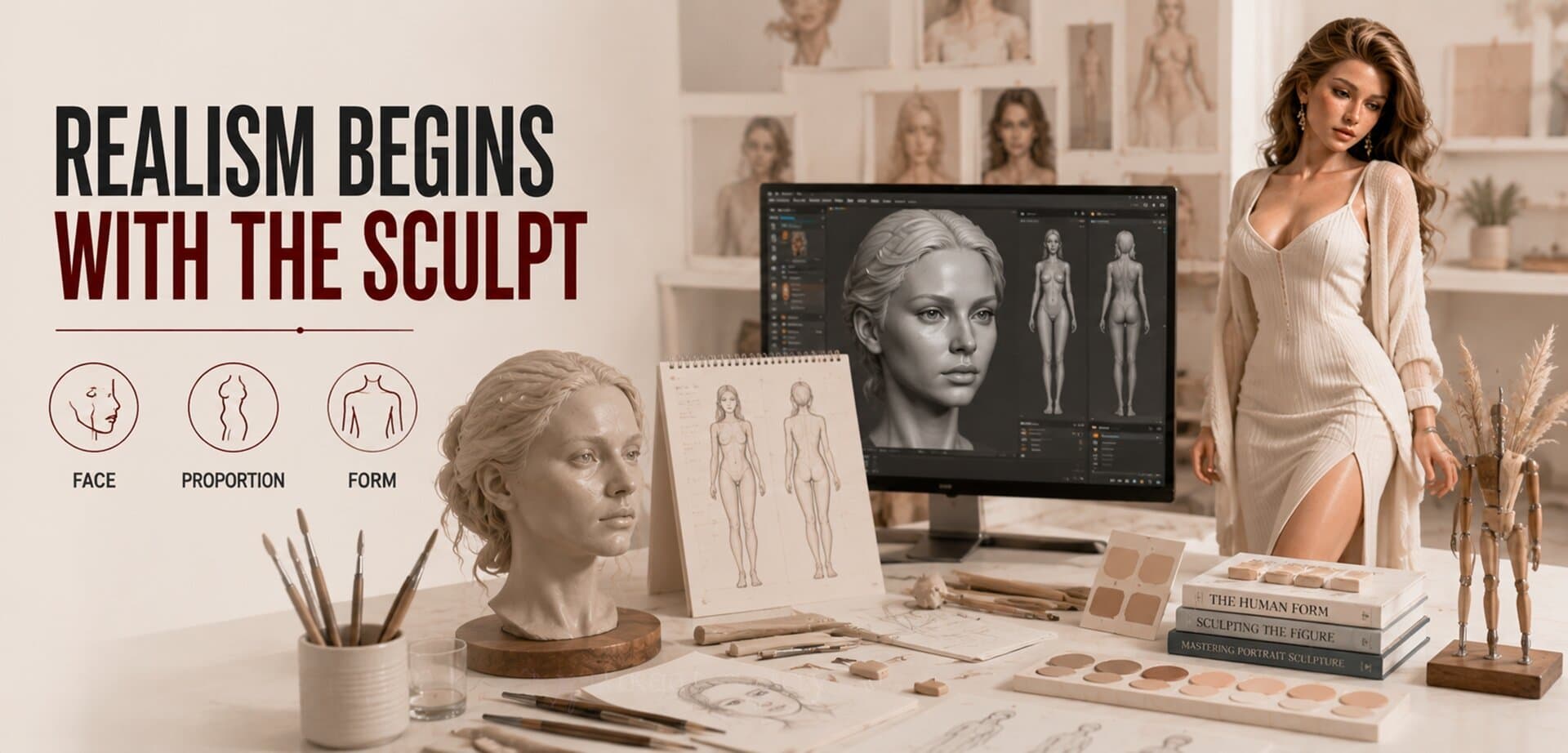
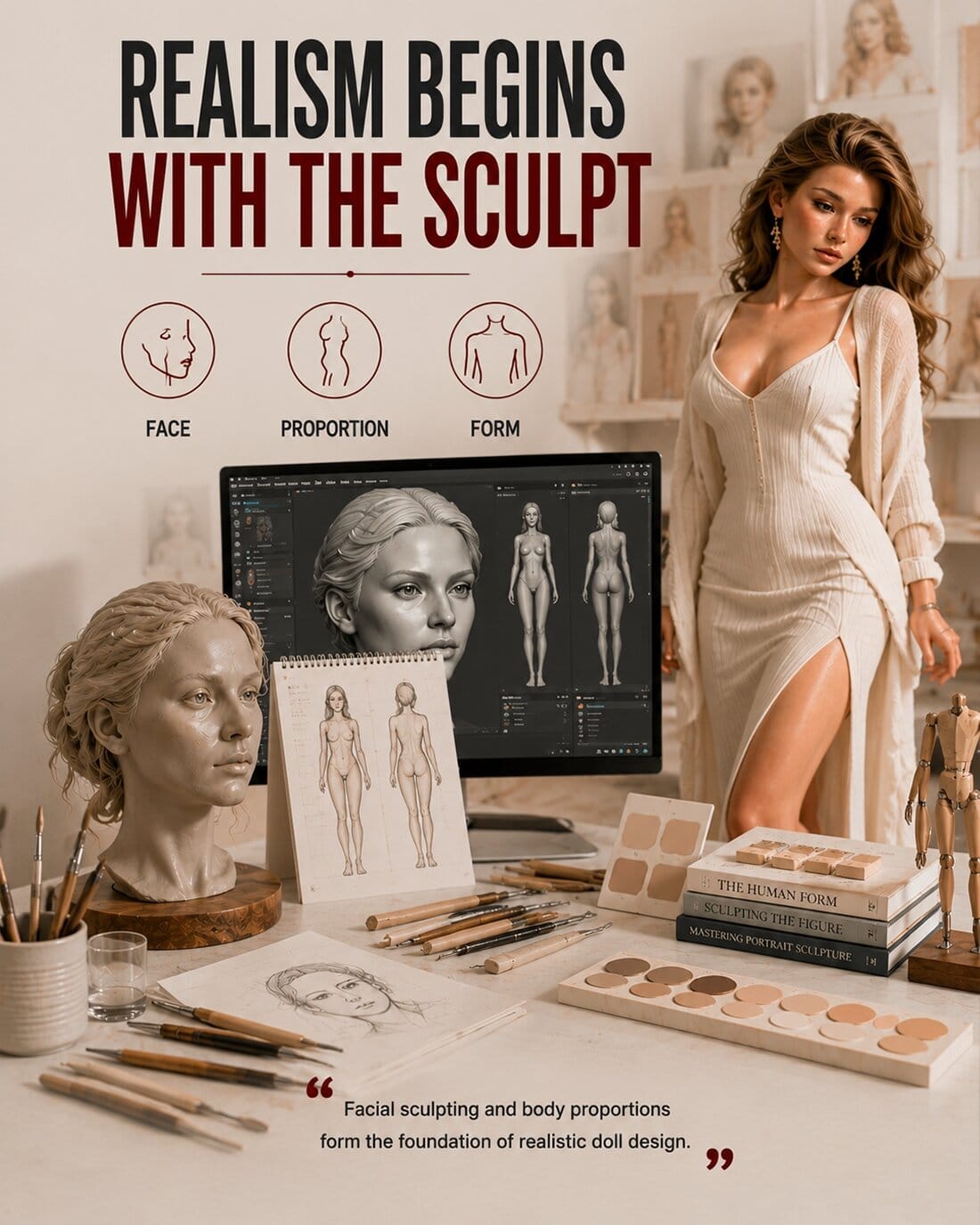
The first stage of creating a realistic doll is usually the design itself. Before materials, molds, or finishing are involved, manufacturers need to determine the facial structure, body proportions, height, shoulder width, torso length, hip shape, limb proportions, hand size, foot size, and overall silhouette. A realistic result depends heavily on how well these elements work together. Designers may use hand sculpting, digital modeling, 3D tools, or combinations of different techniques to create the original form. The goal is not simply to copy individual human features. The complete design needs to look proportionally balanced from multiple viewing angles.
Face Design
Facial design often receives the most attention because the face is usually the first area viewers notice. Eye spacing, nose shape, lip proportions, cheek contours, jawline, chin, and forehead all affect whether the final face appears natural.
Body Proportions
Body proportions influence realism across the full silhouette. Shoulders, torso, waist, hips, arms, legs, hands, and feet should feel visually connected rather than appearing as separate parts.
Mold Making Transfers the Original Shape
Once the original sculpt is finalized, molds are used to reproduce the intended shape in the final material. The quality of the mold affects how accurately facial contours, body details, hands, feet, and surface features are transferred. Small imperfections in the mold can become visible in every finished product made from it, which is why mold quality and maintenance are important parts of consistent manufacturing. Manufacturers may use separate molds for different body parts or complete sections depending on the design and production method. Precision at this stage helps preserve the details created during sculpting.
Material Selection Affects Surface Realism
Material plays an important role in how the final doll looks and feels, but it does not determine realism by itself. Silicone and TPE are commonly used in realistic dolls, and each material has different characteristics related to softness, flexibility, surface finish, weight, durability, and detail retention. Silicone can support very fine sculpted detail and stable surface finishing, while TPE is known for its softer and more flexible feel. The final visual result still depends on how well the material is molded, colored, finished, and integrated with the rest of the design. A premium material cannot compensate for weak sculpting or poor finishing.
👉 To compare finished models designed with lifelike appearance in mind, explore our Realistic Sex Dolls collection.
The Internal Skeleton Shapes Posture and Proportion
The internal skeleton does more than allow movement. It also affects posture, body alignment, joint placement, and how naturally the doll holds different positions. Shoulders, elbows, spine, hips, knees, ankles, neck, wrists, and finger structures all influence the final silhouette. If joint positions do not align well with the external body sculpt, poses can appear mechanical even when the surface design is highly realistic. Manufacturers therefore need to coordinate the skeleton and the external body design carefully. The best visual results usually come from a skeleton that supports natural proportions and controlled movement without distorting the outer shape.
Skin Texture and Color Are Added in Finishing
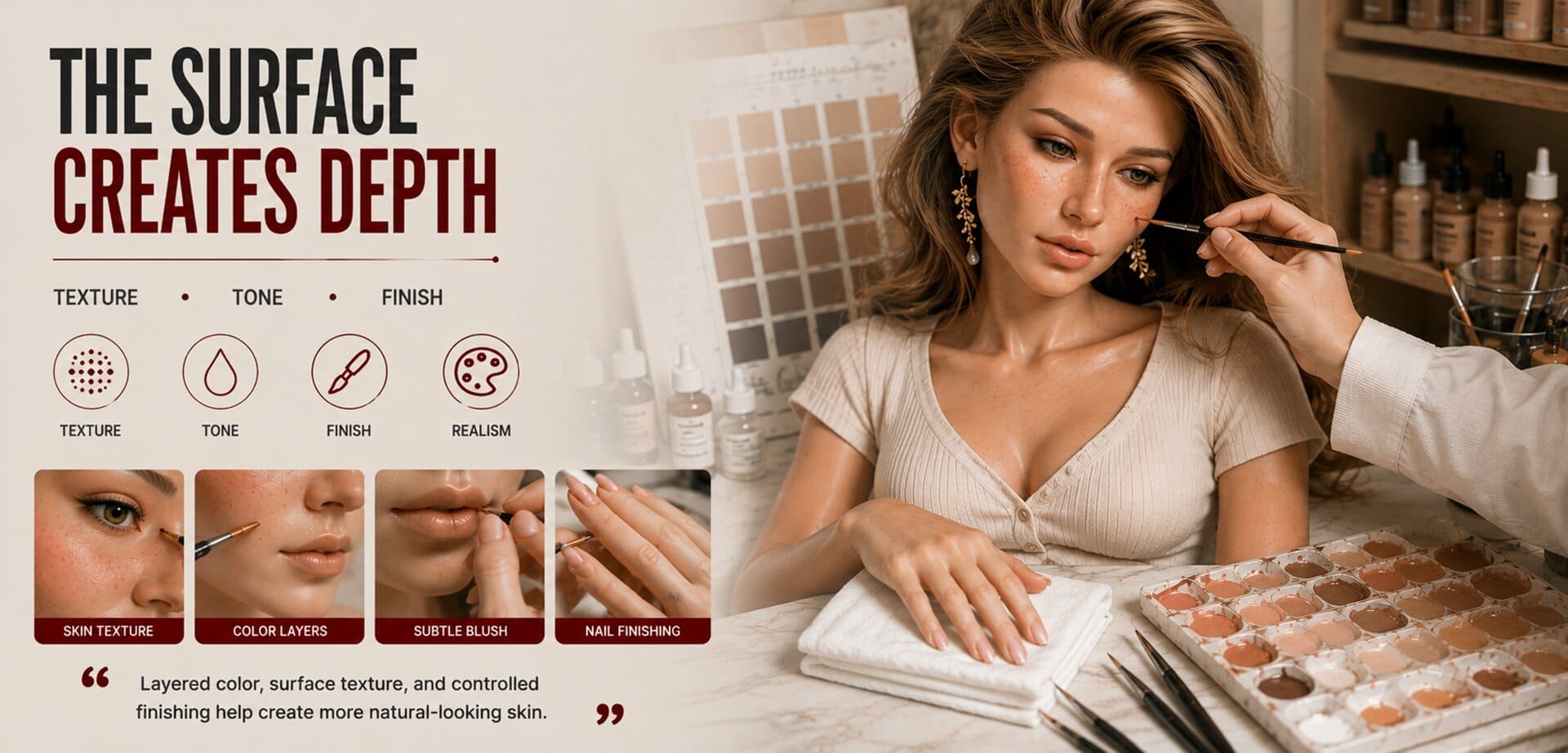
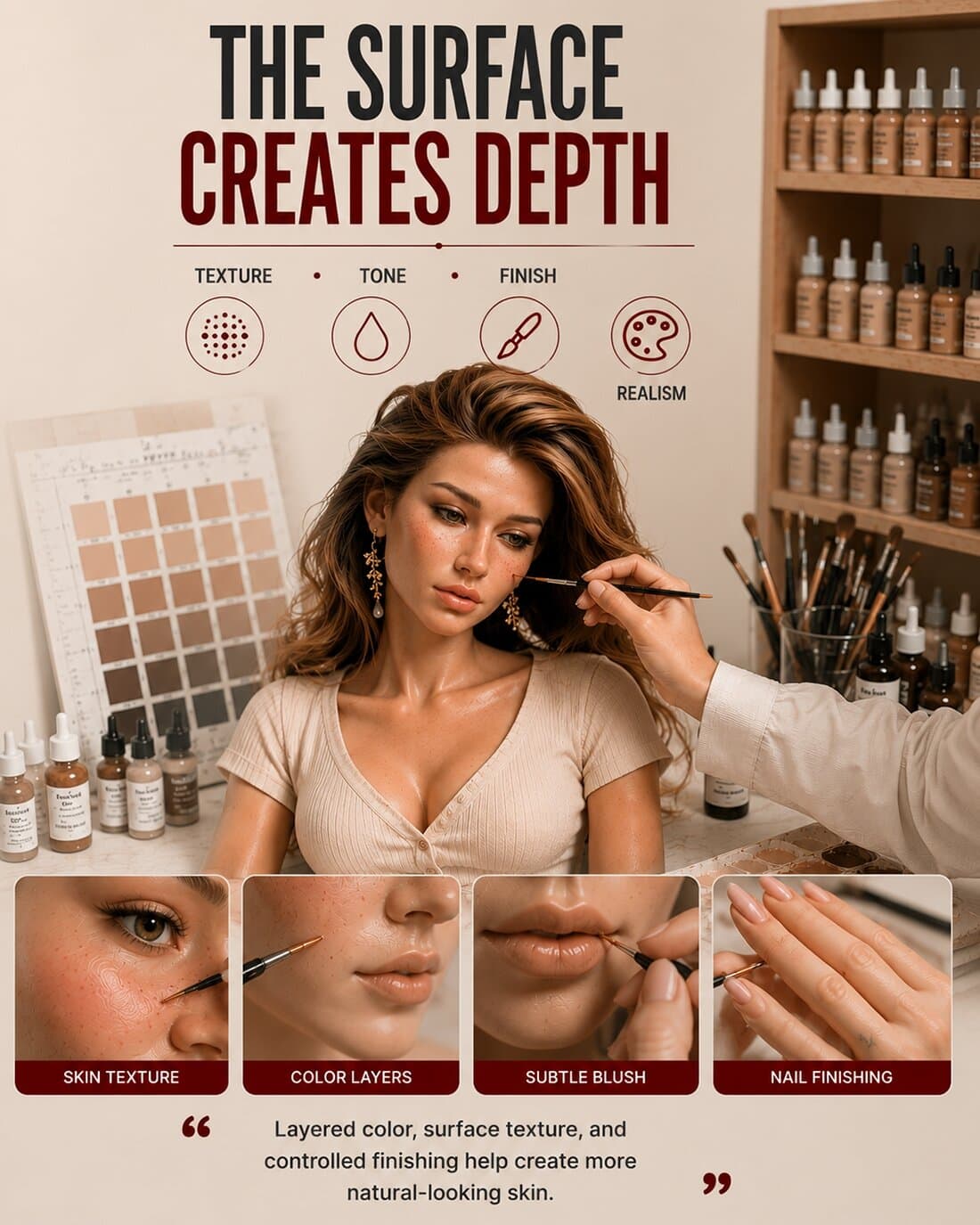
One of the most important stages for visual realism is surface finishing. Human skin does not appear as one completely uniform color or texture. Manufacturers may use layered coloring, subtle shading, surface texture, and local detail work to create a more natural appearance. Areas such as the face, hands, knees, elbows, lips, and visible joints may receive additional attention because these details strongly influence how the product looks at close range.
Skin Tone Variation
Small changes in tone can create visual depth. Flat, perfectly uniform coloring often looks more artificial, while controlled variation can make the surface appear more natural.
Surface Texture
Fine texture can reduce an overly smooth or plastic-like appearance. The amount of texture varies depending on the sculpt, material, and finishing style.
Gloss Control
Surface shine affects how realistic the material looks under lighting. Manufacturers may use finishing techniques that reduce excessive gloss and create a more balanced appearance.
Eyes, Hair, Brows, and Lashes Complete the Face
Facial realism depends on more than the sculpt itself. Eyes, eyelashes, eyebrows, hairline, and hairstyle all influence expression and overall character. Eye placement is especially important. Even a well-sculpted face can look artificial if the eyes are positioned unevenly or the gaze feels unnatural. Hair may be added through wigs, implanted hair, or other styling systems depending on the product design. Brows and lashes also need to match the face rather than appearing overly bold or decorative. The most convincing results usually come from subtle details that work together rather than one exaggerated feature.
Hands and Feet Reveal Manufacturing Quality
Hands and feet are often useful indicators of overall craftsmanship because they contain many small shapes that are difficult to reproduce convincingly. Finger proportions, nails, knuckle contours, palm structure, toe shape, and surface finishing all contribute to realism. A highly detailed face combined with simplified hands can make the complete product feel inconsistent. Premium manufacturers therefore tend to apply similar attention to smaller body details rather than concentrating only on the face.
Seam Treatment and Assembly Affect the Final Appearance
Realistic dolls may be produced using multiple molds, components, and assembly stages. Where different sections meet, seam treatment and finishing can influence how refined the final product appears. Visible mold lines, uneven transitions, or inconsistent surface finishing can reduce realism even when the underlying sculpt is strong. Careful trimming, smoothing, coloring, and inspection help make transitions less noticeable and improve overall consistency.
Craftsmanship Creates the Biggest Difference Between Manufacturers
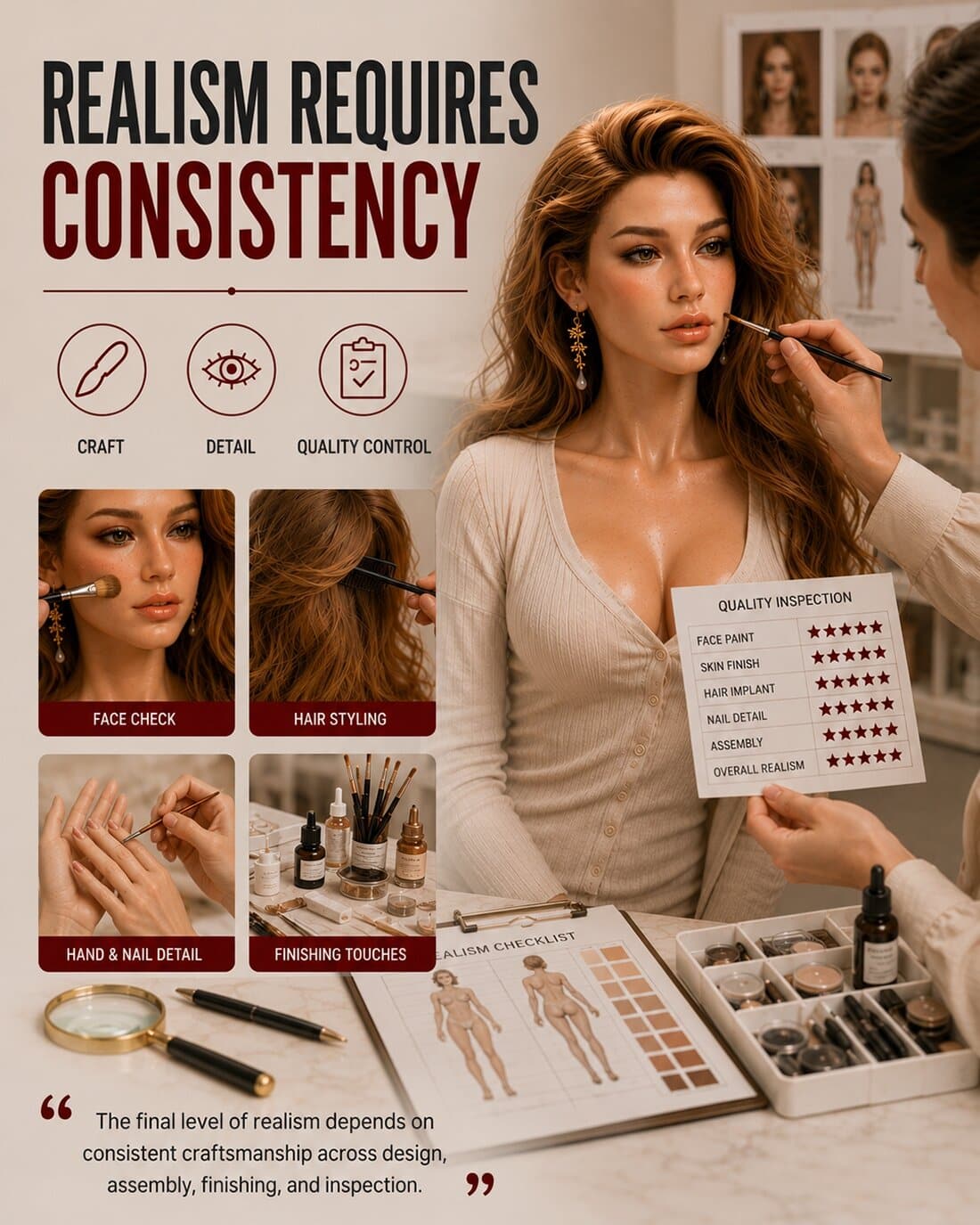
Two manufacturers may use similar materials and similar general production methods yet produce very different results. The difference often comes from craftsmanship. Detailed sculpting, accurate mold work, stable skeleton design, careful color application, realistic eye placement, refined hair presentation, hand finishing, and consistent quality control all add up. This explains why manufacturing realism should not be judged by a single specification such as “silicone” or “TPE.” The complete production standard matters more.
👉 Want to see how these factors are used to evaluate real products? Explore our Best Sex Dolls guide for expert selection criteria, reviews, and top picks.

Why Some Realistic Dolls Look Better Than Others
Different finished dolls can vary dramatically in realism even when their basic specifications appear similar. The biggest differences often come from:
- Sculpting quality
- Body proportion accuracy
- Mold precision
- Material quality
- Skeleton alignment
- Surface texture
- Skin tone variation
- Eye positioning
- Hair and brow finishing
- Hands and feet
- Seam treatment
- Final quality inspection
A strong result depends on consistency across all of these areas. If one stage is significantly weaker than the others, the final product may look less convincing overall.
Can Manufacturing Make a Doll Look Realistic From Every Angle?
High-quality manufacturing can improve realism across multiple viewing angles, but no product should be judged from one promotional photograph alone. Lighting, camera angle, styling, clothing, makeup, and post-processing can all influence how realistic a doll appears in images. A better way to evaluate manufacturing quality is to look at multiple photos, close-up details, body proportions, hands, feet, hair, surface finish, and any available product videos. A well-made doll should maintain visual consistency across different views rather than relying on one especially flattering angle.
👉 You can also explore our complete Sex Dolls collection to compare different materials, body styles, sizes, and levels of realism.
Frequently Asked Questions
